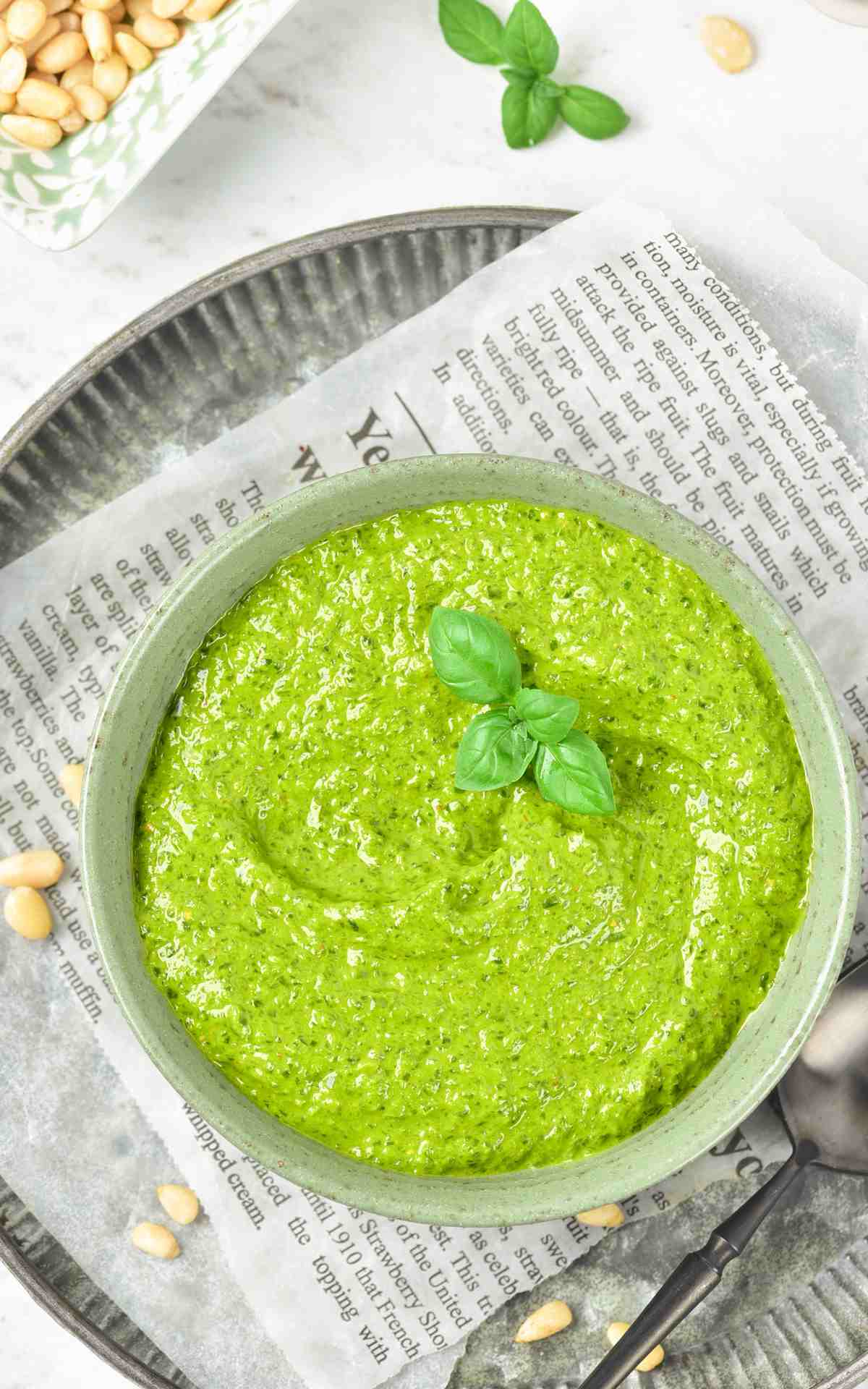
Basil pesto is one of the easiest sauces you can make with fresh herbs. This homemade basil pesto uses fresh basil leaves, pine nuts, Parmesan cheese, garlic, olive oil, and a squeeze of lemon juice to create a bright and flavorful sauce.
Fresh pesto has a vibrant flavor that is hard to match with store-bought versions. The combination of fresh basil, nutty pine nuts, and Parmesan cheese creates a rich sauce that works well on pasta, pizza, sandwiches, and roasted vegetables.
If you grow basil plants in an herb garden or find yourself with extra basil during the summer months, this is the perfect way to use it.
What Is Basil Pesto?
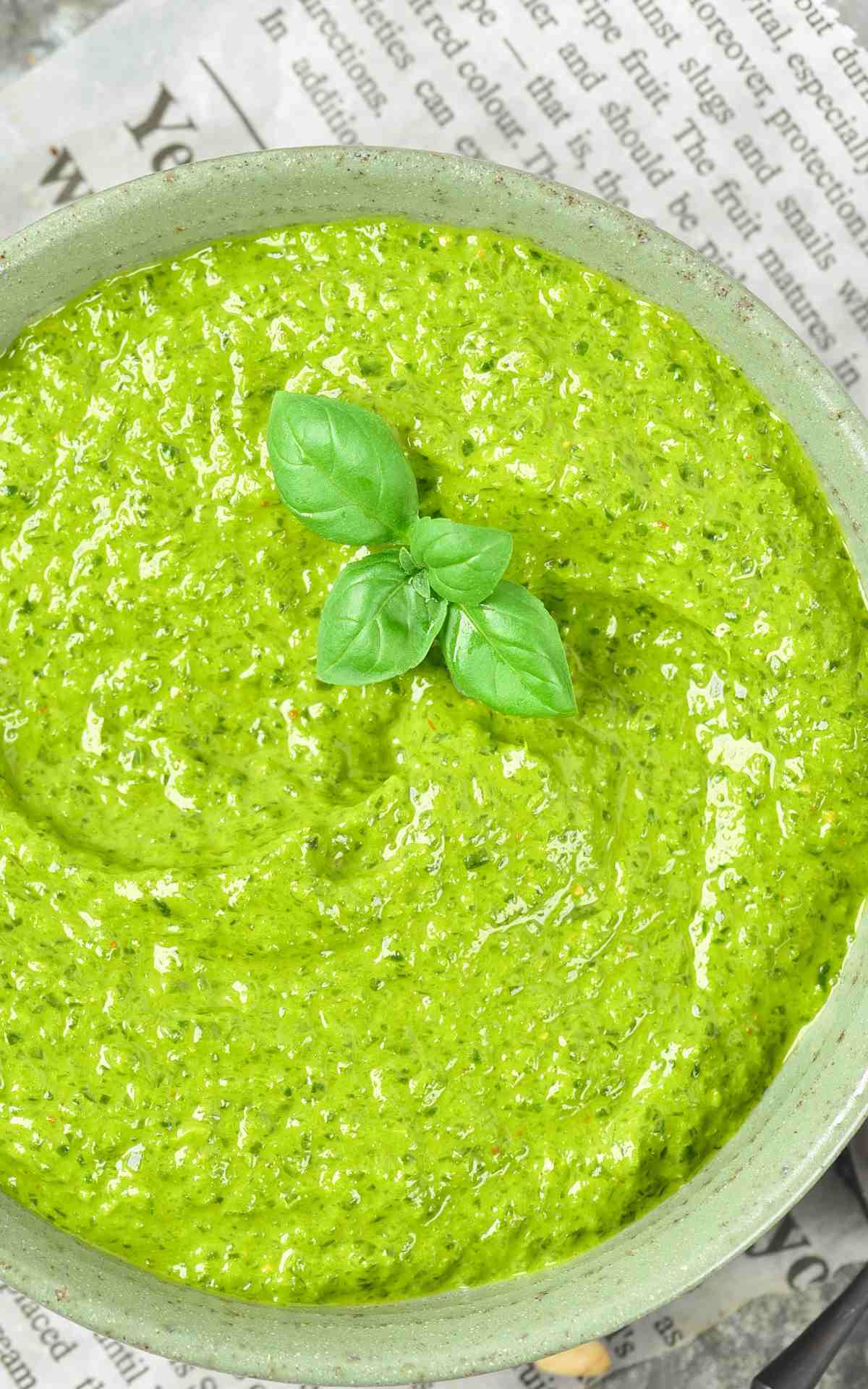
Basil pesto is a classic Italian sauce made with fresh basil leaves, pine nuts, Parmesan cheese, garlic, and olive oil. The ingredients are blended together to create a thick green sauce with a bright herb flavor and a slightly nutty taste.
Traditional pesto comes from Genoa, Italy, where it is often served with pasta. Today, basil pesto is used in many different dishes, including pasta, pizza, sandwiches, and roasted vegetables.
Because it uses simple ingredients and comes together quickly in a food processor or blender, pesto is one of the easiest homemade sauces to make.
Why This Recipe Works
- Fresh basil leaves create the bright green color and vibrant flavor that make pesto so fresh.
- Toasting the pine nuts brings out their natural nutty flavor.
- Extra-virgin olive oil helps create a smooth and creamy texture.
- A squeeze of lemon juice balances the richness of the olive oil and cheese.
- Blending the ingredients in stages helps create a smoother pesto.
Ingredients
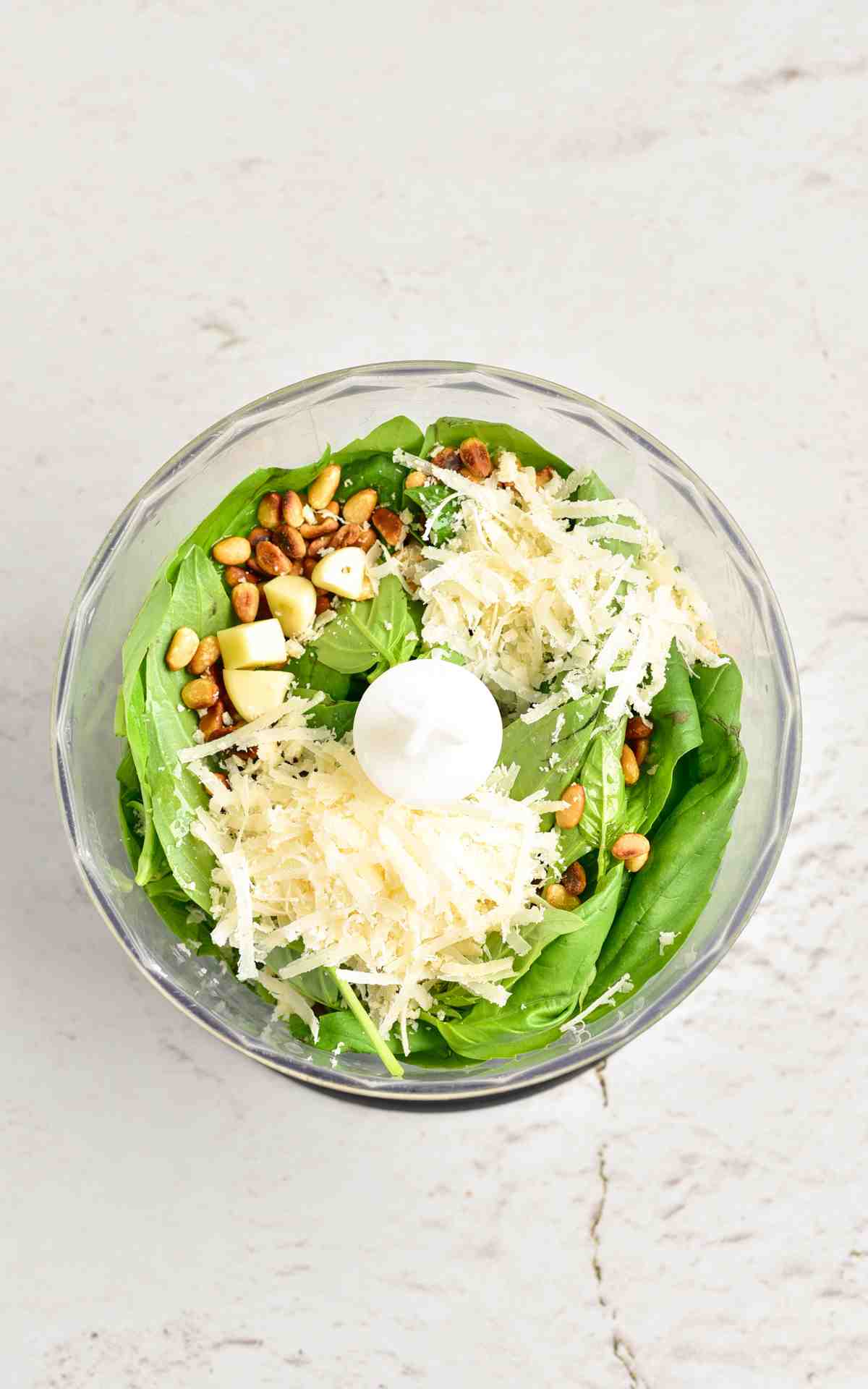
- 3 large bunches fresh basil (about 3 packed cups basil leaves)
- 3 tablespoons pine nuts
- 2 to 3 garlic cloves
- 1 ounce Parmesan cheese, grated
- 3 pinches salt (about ¼ teaspoon kosher salt)
- ½ cup olive oil
- 2 tablespoons lemon juice
- Black pepper, to taste
How to Make Basil Pesto
- Toast the pine nuts in a dry skillet over medium heat for 2 to 3 minutes, stirring occasionally, until lightly golden and fragrant. Remove from the skillet and let them cool slightly.
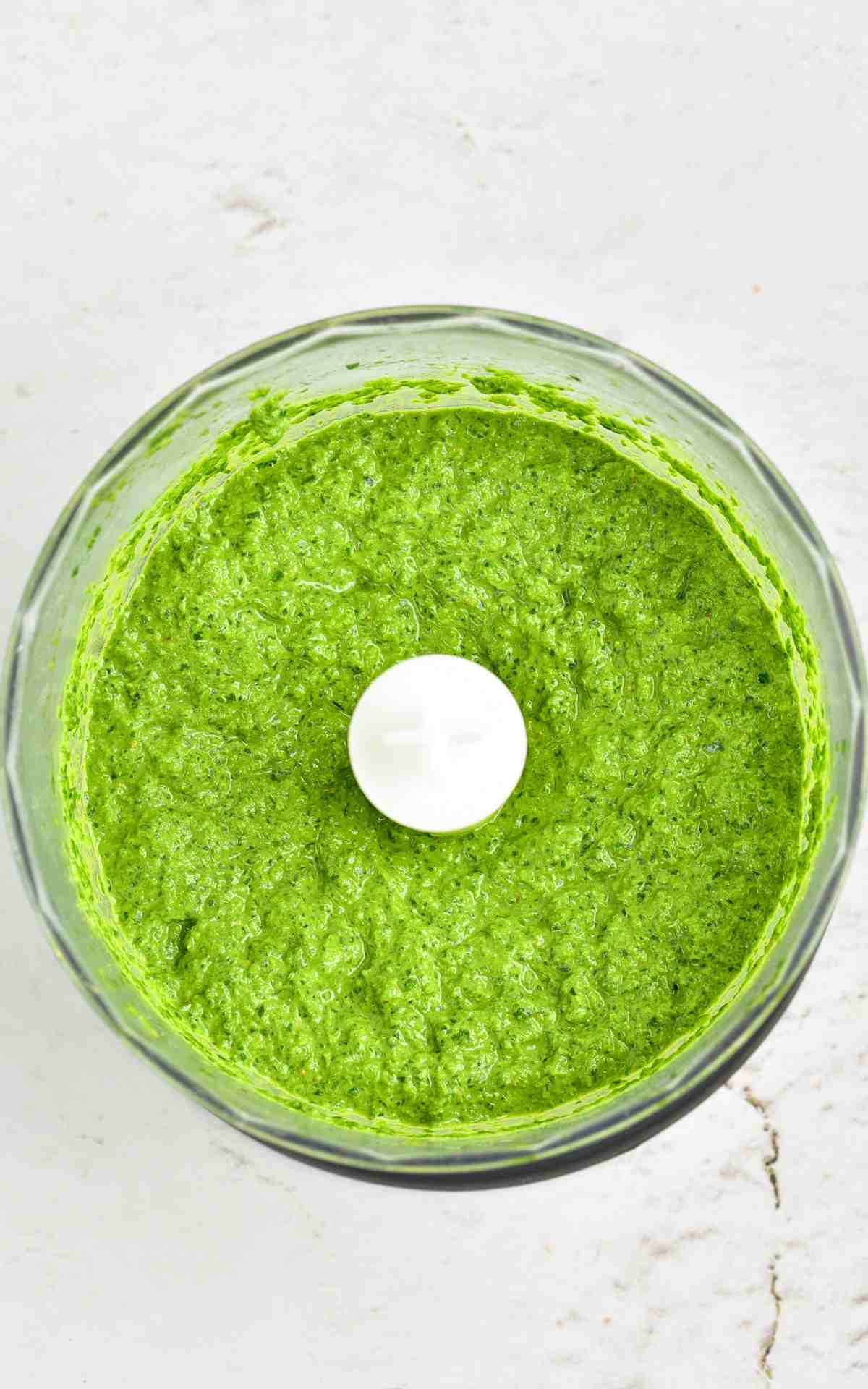
- Add half of the basil leaves, half of the olive oil, the toasted pine nuts, and the garlic cloves to a food processor or blender and pulse until the basil begins to break down.
- Add the grated Parmesan cheese and a few pinches of salt. Blend until the mixture begins to form a coarse paste, stopping to scrape down the sides if needed.
- Add the remaining basil leaves, the rest of the olive oil, the lemon juice, and black pepper.
- Blend again until the pesto is smooth with a slightly textured consistency. Taste and adjust the salt if needed.
Helpful Tips
Use fresh basil leaves that are bright green for the best flavor and color.
Do not overblend the pesto. A slightly textured sauce gives the best results.
If the pesto seems too thick, add a small amount of additional olive oil until the desired consistency is reached.
Toast the pine nuts before blending to bring out their flavor.
How to Use Basil Pesto
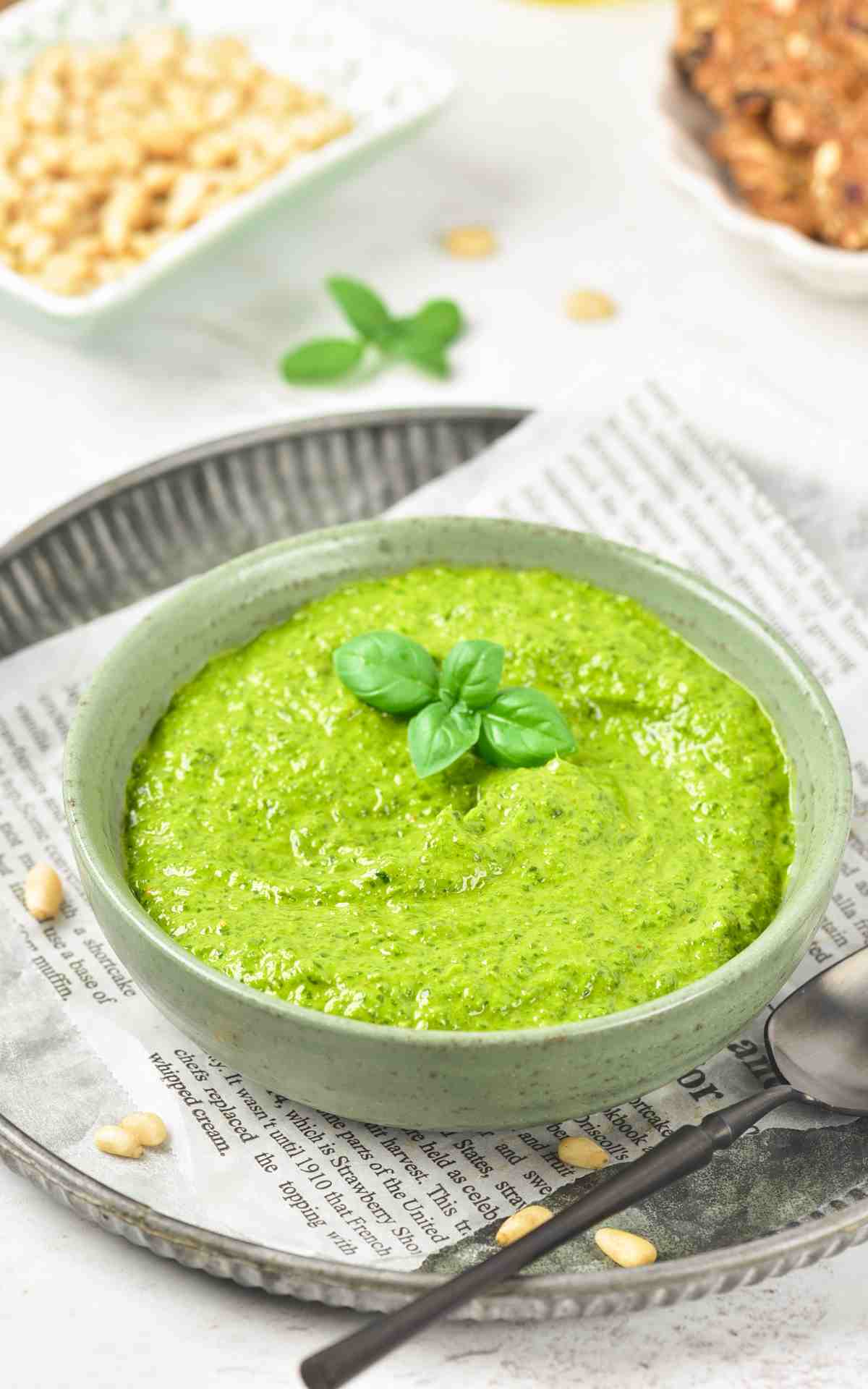
Basil pesto is a versatile sauce that can be used in many different recipes. Once you have a batch ready, there are plenty of simple ways to use it.
Toss pesto with hot pasta for a quick meal, or use it in recipes like Pesto Pasta or Instant Pot Chicken Pesto Pasta.
Spread a thin layer of pesto on homemade pizza before adding toppings for a fresh basil flavor.
Pesto also works well as a sauce for chicken, stirred into roasted vegetables, or spread on sandwiches and wraps.
You can even mix a spoonful into warm pasta dishes to add a bright herb flavor without needing a complicated sauce.
Variations
- Different nuts: Swap pine nuts for sunflower seeds, pumpkin seeds, walnuts, or almonds.
- Different cheese: Pecorino Romano or Asiago cheese can be used instead of Parmesan.
- Nut-free pesto: Use sunflower seeds in place of pine nuts.
- Extra lemon flavor: Add a little lemon zest for a brighter flavor.
How to Keep Pesto Bright Green
Fresh basil pesto can darken as it sits. To keep the pesto bright green, press a thin layer of olive oil across the top of the pesto before storing it in the refrigerator.
This helps protect the pesto from air and keeps the color vibrant.
Storage
Store basil pesto in an airtight container in the refrigerator for up to 4 days.
For longer storage, freeze pesto in an ice cube tray. Once frozen, transfer the pesto cubes to freezer bags or a freezer-safe jar.
Frozen pesto keeps well for up to 3 months.
📖 Recipe
Fresh Basil Pesto Recipe (Easy Homemade Pesto)
Equipment
Ingredients
- 3 cups basil - about 3 bunches
- 3 tablespoons pine nuts - toasted
- 3 garlic cloves
- 2 tablespoons Parmesan cheese - grated
- 3 pinches salt
- ½ cup olive oil
- 2 tablespoons lemon juice
- Black pepper to taste
Instructions
- Toast the pine nuts in a dry skillet over medium heat for 2 to 3 minutes until lightly golden.
- Add half of the basil leaves, half of the olive oil, the toasted pine nuts, and the garlic cloves to a food processor or blender and pulse until the basil begins to break down.
- Add Parmesan cheese and salt.
- Blend until the mixture forms a coarse paste.
- Add the remaining basil, olive oil, lemon juice, and black pepper.
- Blend again until the pesto reaches a smooth consistency.
- Taste and adjust seasoning if needed.
Video
Notes
- Toasting pine nuts enhances their flavor.
- If pesto is too thick, add a little extra olive oil.
- Store pesto in an airtight container and cover the top with a thin layer of olive oil to prevent browning.
- Freeze pesto in an ice cube tray for easy portions.
Nutrition
Nutritional information is an estimate based on third-party calculations. Actual values may vary due to ingredients, measurements, and serving sizes.
© Mama Needs Cake
Tried this recipe?
Let us know how it was!Dana is an experienced recipe creator who crafts easy and delicious recipes for all levels of home cooks.
Her recipes range from classic comfort foods to healthy and nutritious meals, and she is always on the lookout for new and exciting ways to bring flavor and variety to the table.