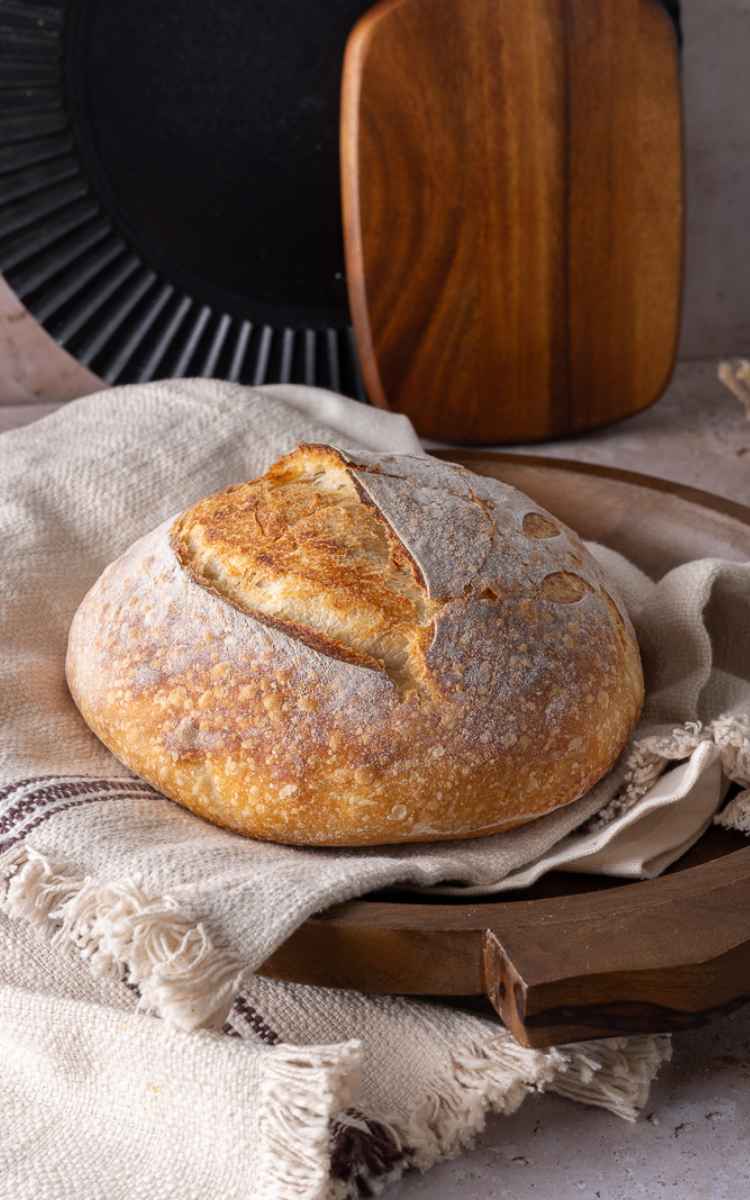
Sourdough bread for beginners is a loaf made with four things. Flour, water, salt, and a sourdough starter. That is it. The starter does the rising. No yeast packets. No kneading. Just a Dutch oven and a kitchen scale.
If your starter is active and ready, this is the loaf to start with. My first loaf was ugly and I ate the whole thing warm with butter. Yours might be too. The taste will still surprise you.
Why This Sourdough Bread for Beginners Works
- Four ingredients. Flour, water, salt, and starter. The starter is what makes it rise, and those few ingredients are why the flavor is so good.
- No kneading. You do not fight a sticky ball of dough on the counter. Stretch and folds build the structure while the dough sits in the bowl. Fold the sides over, turn the bowl, repeat. The dough does the work.
- You judge the rise by feel, not by the clock. A loaf is ready for the fridge when it has risen about half to three quarters, looks puffy, has bubbles along the sides, and jiggles when you nudge the bowl. Your kitchen temperature changes how long that takes, so the clock will not help you.
- The overnight rest in the fridge is where the tang comes from. It slows the rise and gives the flavor time to build. Bonus, cold dough is easier to score and does not stick to everything.
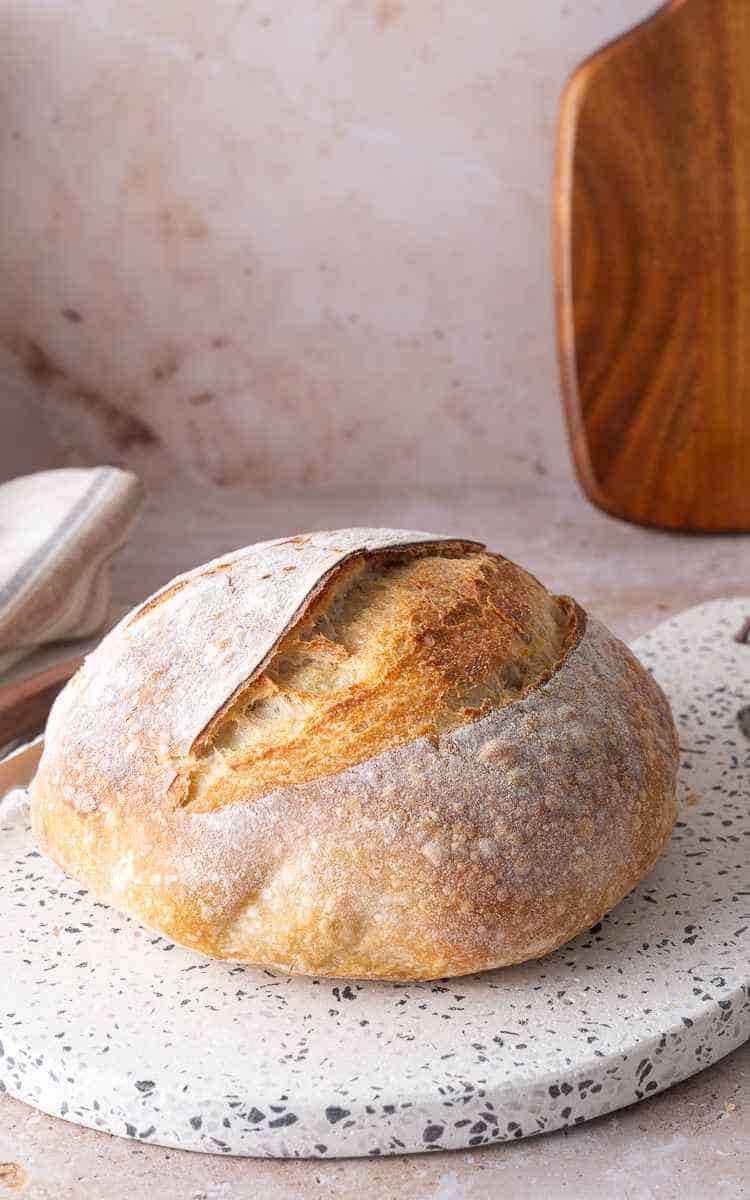
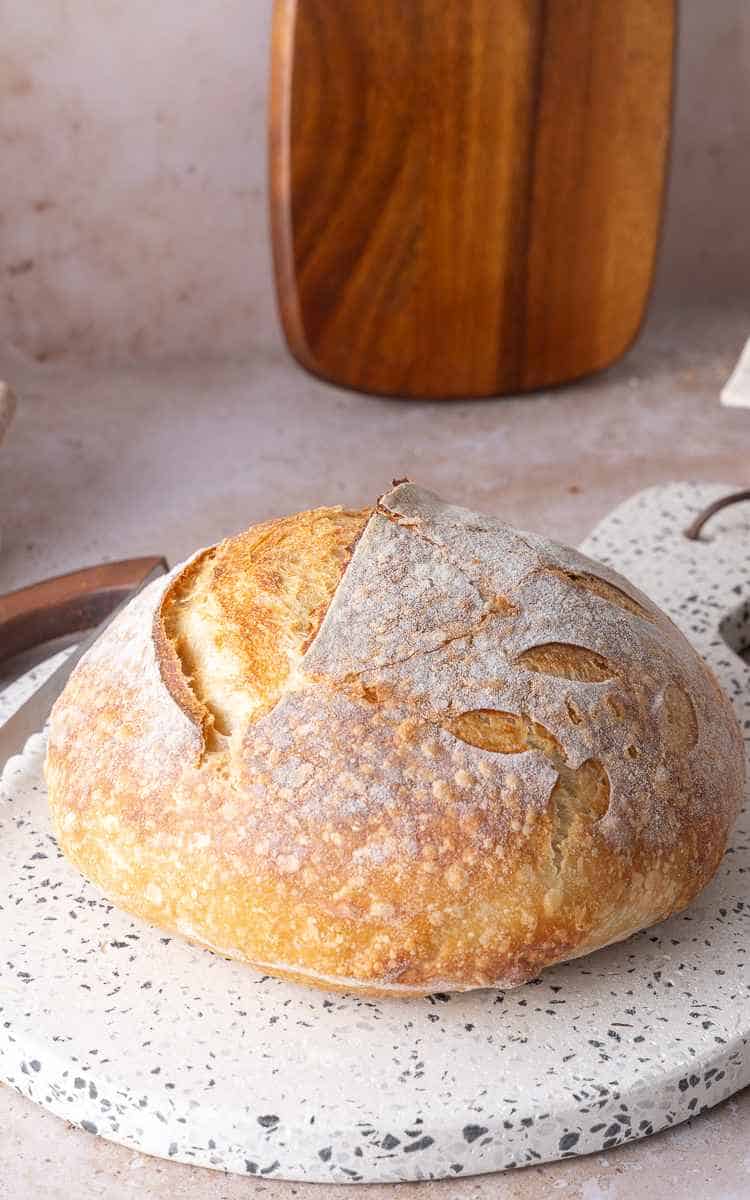
- A Dutch oven is the secret to that crackly crust. The lid traps steam so the loaf can puff before the crust sets. Take the lid off at the end and the crust deepens and browns.
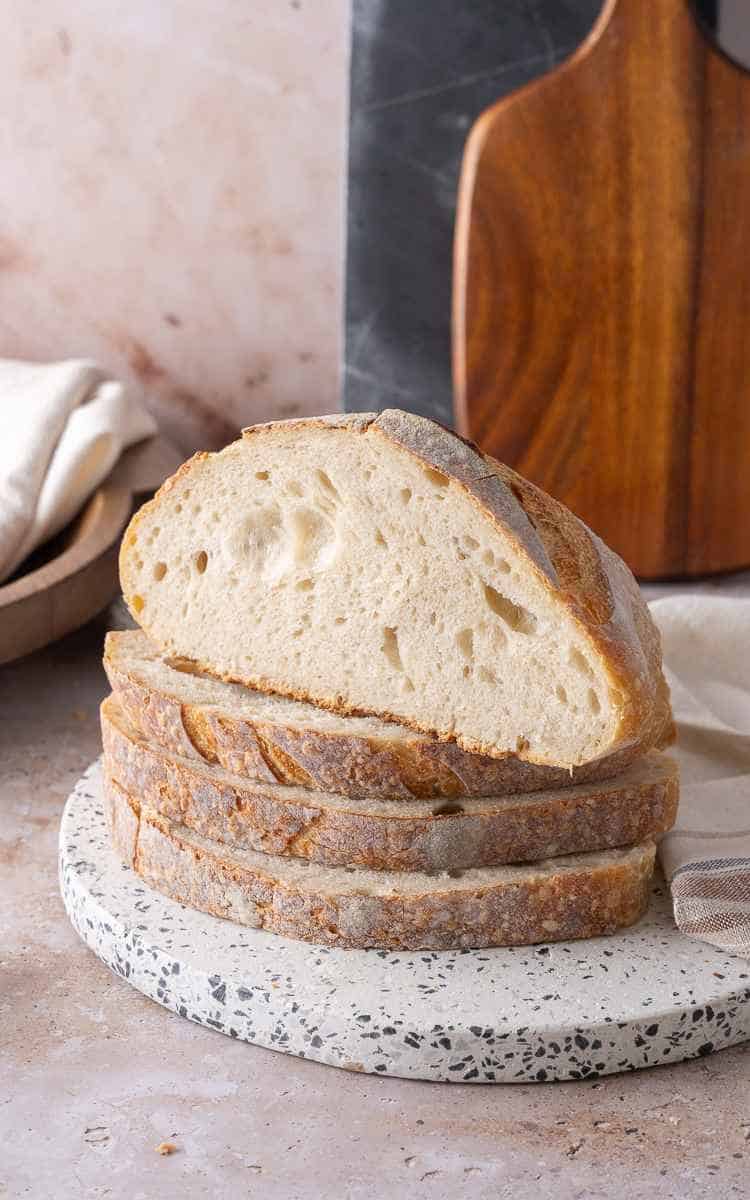
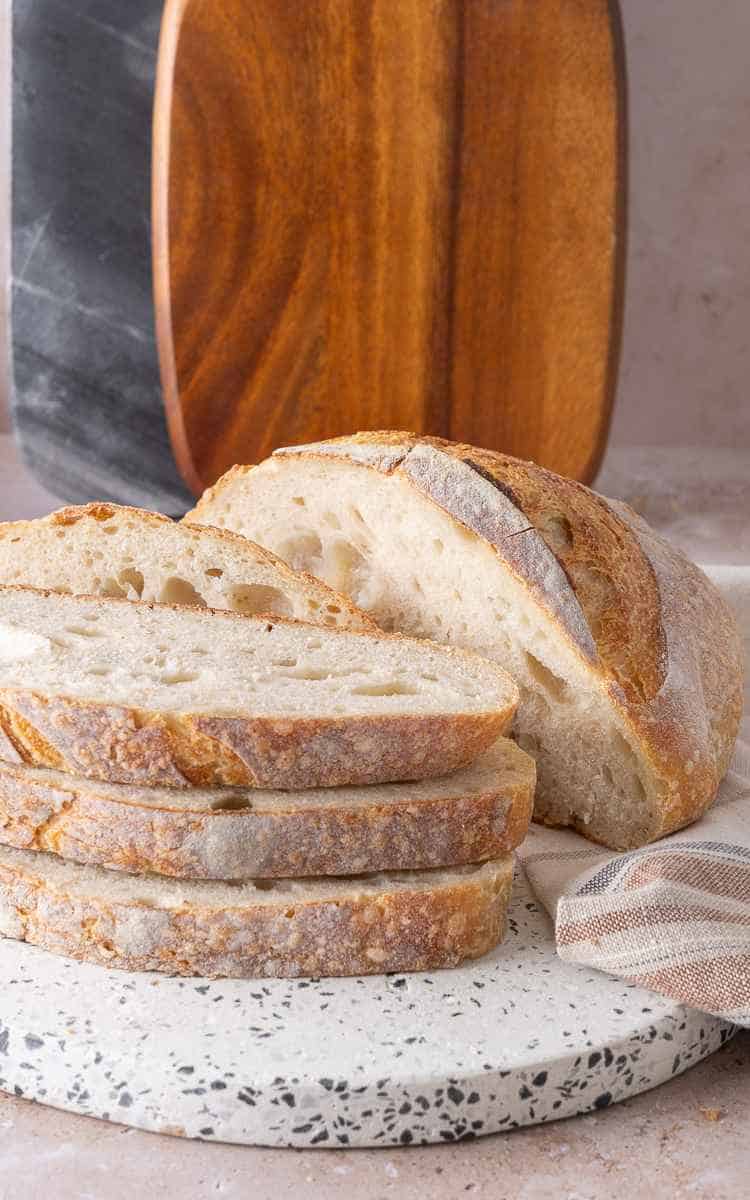
- Let it cool before you cut it. Two hours, minimum. I know it is hard. Cut it warm and the inside is gummy because the loaf is still finishing itself.
How to Make Sourdough Bread for Beginners
- Feed your starter four to eight hours before you plan to mix. You want 100 grams of bubbly, active starter. Keep a little behind to feed for next time.
- In a large bowl, stir together 100 grams of starter and 350 grams of water until the starter is broken up.
- Add 500 grams of bread flour and 10 grams of salt. Mix with your hand or a spoon until no dry flour shows. It will look rough and shaggy. That is right. Cover and let it rest 30 minutes.
- First stretch and fold. Wet your hand so the dough does not stick. Lift one side of the dough, stretch it up until it resists, then fold it over the center. Turn the bowl a quarter turn and do it again. Go all the way around all four sides. Cover and rest 30 minutes.
- Do a second and third set of stretch and folds the same way, resting 30 minutes between each. The dough should feel smoother and springier by the third set. If it still feels loose, rest and do one more.
- Now leave it alone. Cover the bowl and let it rise until it has grown about half to three quarters, looks puffy, has bubbles on the sides, and jiggles when you move the bowl. This can take a few hours depending on how warm your kitchen is.
- Shape the dough on a lightly floured counter. Pull it toward you and rotate, building a tight ball. If you want a longer loaf, shape it into an oval instead. Be gentle. You built air in there and you want to keep it.
- Set the dough seam-side up in a floured banneton or a bowl lined with a floured towel. Cover and refrigerate overnight, 10 to 16 hours.
- The next day, heat the oven to 450°F with the Dutch oven inside, lid on, for 30 minutes. Then take the lid off and let the empty Dutch oven heat 5 more minutes while you get the dough.
- Turn the dough out onto parchment straight from the fridge. It will be cold and easy to handle. Score the top with a sharp razor or a lame, one confident slash. Lower it into the Dutch oven, put the lid on.
- Bake covered at 450°F for 30 minutes. Take the lid off, drop the oven to 425°F, and bake 15 to 20 minutes more until the crust is a deep golden brown. The inside is done around 205 to 210°F if you have a thermometer.
- Move the loaf to a wire rack. Cool at least 2 hours before you slice it. I know.
Quick Tips
- Weigh everything. Sourdough is not forgiving with cups.
- Feed the starter 4 to 8 hours before you mix.
- Judge the rise by feel. Wait for the jiggle.
- Shape gently. Do not knock the air out.
- Score it straight out of the fridge. Cold dough cuts cleaner.
- Cool a full 2 hours or the crumb turns gummy.
Make Ahead and Storage
The dough does the waiting for you. Mix and bulk ferment the day before, shape, and refrigerate overnight. Bake it the next day whenever suits.
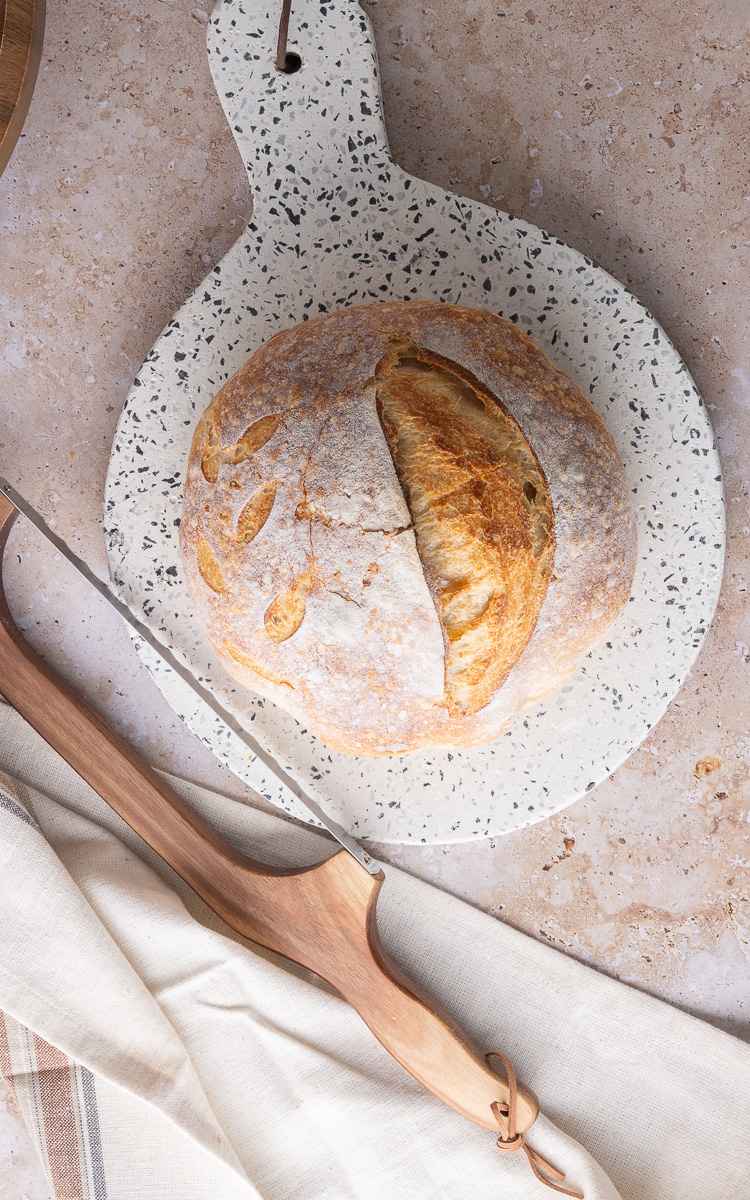
For the first day, store the baked loaf cut-side down on a cutting board. After that, wrap it in a clean kitchen towel or a paper bag. Plastic makes the crust go soft.
Slice the loaf and freeze it in a freezer bag. Toast straight from frozen. It comes back beautifully.
More Sourdough Recipes
If you like a savory loaf, my cheddar jalapeno sourdough bread is the move. My chocolate sourdough bread is the sweet version, with cocoa, espresso, and chocolate chips folded through.
📖 Recipe
Sourdough Bread for Beginners
Equipment
Ingredients
- 100 g active sourdough starter
- 350 g water
- 500 g bread flour
- 10 g salt
Instructions
Feed the Starter
- Several hours before making the dough, feed your starter so you have at least 100 grams of active starter for the recipe plus a little left over to maintain it. For example, combine 25 grams starter, 50 grams water, and 50 grams bread flour. Stir, mark the level on the jar, and leave it at room temperature.
- Let the starter rise until it has at least doubled and is bubbly and puffy, about 4 to 8 hours depending on your kitchen. Measure out 100 grams of active starter for the dough. Keep the rest to feed for your next bake.
Make the Dough
- Combine the active starter and water in a large bowl. Stir to disperse.
- Add the bread flour and salt. Mix until no dry flour remains. The dough will look rough and shaggy. Cover and rest 30 minutes.
Stretch and Folds
- First stretch and fold. Lift one side of the dough with a damp hand until you feel resistance, then fold it over the center. Rotate a quarter turn and repeat around all four sides. Cover and rest 30 minutes.
- Second stretch and fold. Repeat around all four sides. Cover and rest 30 minutes.
- Third stretch and fold. Repeat around all four sides. The dough should feel smoother and more elastic. If it still feels loose, rest 30 minutes and do one more set.
- Bulk ferment, covered and undisturbed, until the dough has risen 50 to 75 percent, looks puffy and aerated, has bubbles along the sides, has a slight dome, and jiggles when you move the bowl.
- Turn the dough onto a lightly floured surface. For a round loaf, pull and rotate to form a boule. For an oval loaf, shape into a batard. Work gently to keep the air.
- Transfer seam-side up to a well-floured banneton. Stitch the seam if needed. Cover and refrigerate overnight, 10 to 16 hours.
Bake
- Preheat the oven and Dutch oven, lid on, at 450°F for 30 minutes. Remove the lid and heat 5 more minutes.
- Turn the dough onto parchment straight from the fridge. Score the top. Lower into the hot Dutch oven and replace the lid.
- Bake covered at 450°F for 30 minutes. Uncover, reduce to 425°F, and bake 15 to 20 minutes more until deeply golden. The center should read about 205 to 210°F.
- Cool on a wire rack at least 2 hours before slicing.
Notes
- Feed the starter 4 to 8 hours before mixing. It should be bubbly and active.
- Use a kitchen scale. Cups are not accurate enough for sourdough.
- If the dough feels loose after three folds, do one more.
- Judge the rise by feel, not time. Wait for the puffy, jiggly dough.
- Shape gently. Do not knock the air out.
- Score the loaf straight from the fridge. Cold dough cuts cleaner.
- Cool at least 2 hours or the crumb will be gummy.
- Sourdough is best used with weight, not volume.
Nutritional information is an estimate based on third-party calculations. Actual values may vary due to ingredients, measurements, and serving sizes.
© Mama Needs Cake
Tried this recipe?
Let us know how it was!Dana is an experienced recipe creator who crafts easy and delicious recipes for all levels of home cooks.
Her recipes range from classic comfort foods to healthy and nutritious meals, and she is always on the lookout for new and exciting ways to bring flavor and variety to the table.